Every time SEO has died

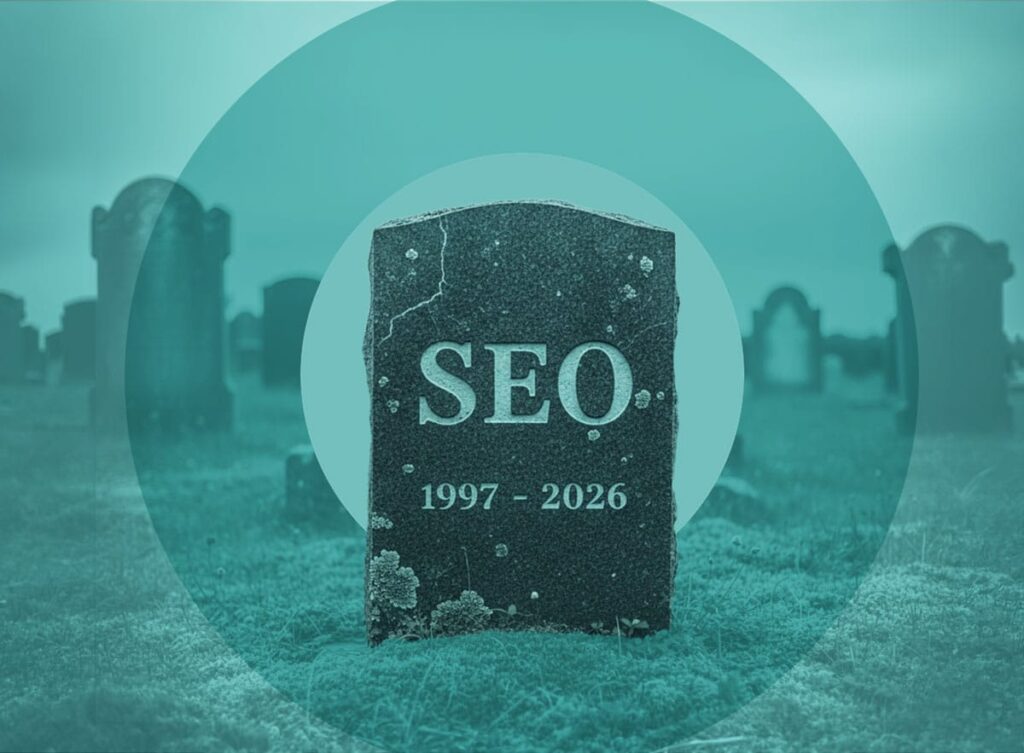
SEO is dead… again!
The narrative that SEO is dead is nothing new; it's practically as old as the internet itself! Each "death" has been less a funeral and more a dramatic costume change for SEO, forcing it to shed its outdated outfits and embrace something more sophisticated.
As SEO is now “dead” again, we thought we’d take a trip down memory lane and have a look at every time SEO has died.
SEO - the back story
SEO began in the mid-90s as the first search engines attempted to start cataloguing the early web. However, the term “SEO” came about in 1997 when it was tied to the efforts of optimising websites to rank higher in search results.
Back then, SEO was less about sophisticated algorithms and more about stuffing meta keyword tags like a Christmas turkey and hiding text on pages with the same colour background. Ah, simpler, shadier times!
Every Time SEO Has Died (But Didn't, Obviously)
1997: The Original "Search is Dead" Party Pooper
The very first notable eulogy for SEO came from Richard Hoy in 1997. That’s right, in the same year the term was first coined.
He genuinely believed search engines were a "dead-end technology," too complex and full of misleading info. He basically told his clients to set their meta tags and then "forget it."
Granted, Richard wasn’t saying “SEO is dead” in 97, he was saying that search engines were. To say Richard was slightly incorrect is a bit of an understatement.
2003-2004: The Algorithm Antics Begin (Florida, Cassandra, Austin)
Next, Google decided it was time to clean house with updates like Florida, Cassandra, and Austin. These updates swooped in like digital sheriffs, penalising keyword stuffing, hidden text, and shady link schemes.
Suddenly, the Wild West of SEO got some rules, and many who thrived on "by any means necessary" tactics now fell short. All of a sudden, black hats at the top of the SERPs were replaced with white hats heroes.
This, again, wasn't the death of SEO, but it was the death of SEO as many knew it. It was the end of its rebellious phase, pushing it towards valuing helpful content.
2005: "ShoeMoney" Predicts the End of the "Tricks"
Web entrepreneur Jeremy "ShoeMoney" Schoemaker declared SEO dead in 2005. His fear? That manipulative tactics wouldn't work anymore because search engines were getting too smart. He saw "short-term top rankings" as a fleeting dream. Jeremy's prophecy was a sign that SEO needed to grow up and move past its "trick-based" antics towards something more sustainable.
Jezza was right. SEO needed to change. It had to move away from certain tactics, just like it had before. But this wasn’t the final nail in the coffin for SEO; something else was looming in the distance.
2009-2010: The Caffeine Jolt
Google's Caffeine update, rolled out in 2010 (with early testing in 2009). It was a massive infrastructure change that left some, like Robert Scoble, saying “SEO isn’t important any more”.
This update wasn't about penalising specific tactics, like so many before it, but about improving Google's ability to crawl and index the web much, much faster. This meant fresher results and a huge increase in the sheer volume of information Google could process.
For some, the faster indexing felt like a chaotic jolt, with new content appearing and disappearing quicker than ever. It wasn't a "death," but certainly caused some caffeine-induced heart palpitations for SEOs, reminding everyone that speed and fresh content were becoming paramount.
2011: Panda Pounces on Poor Content
The Google Panda update in 2011 was a big one. It specifically targeted low-quality, spammy, and duplicate content. Suddenly, quantity wasn't king; quality was. Many "black hat SEOs" who relied on content farms let out a collective gasp. For them, SEO nearly did die.
However, this was a stern telling off from Google. The search engine was letting shady characters know they need to change their ways. For white hat SEOs, they did what they always have done, pivoted.
Until the next update.
2012: Penguin Swims in and Cleans Up Links
Right on Panda's heels came the Penguin update in 2012, which took aim at manipulative link building. Link farms and dodgy blog networks were out. This sparked another wave of "SEO is dead" declarations, notably from Ken Krogue in Forbes.
The truth, Penguin just pushed SEOs to build stronger, healthier links. It taught us that quality and ethical link building were the way forward. Crazy, right?
2015 & 2019: AI Arrives (RankBrain & BERT)
The mid-to-late 2010s brought the brainiacs to the party: RankBrain (2015) and BERT (2019). These machine learning algorithms helped Google understand user intent and conversational queries better than ever. Which, of course, created panicked whispers in the SEO world: "Keywords are dead! SEO is dead!"
The truth? It just meant SEO had to get smarter, again, focusing on understanding what users really wanted, not just the exact words they typed. It became about providing comprehensive, helpful answers, making E-A-T (Expertise, Authoritativeness, Trustworthiness) the new cool kid on the block.
2023-Present: The AI Revolution (Helpful Content & SGE)
And now, the latest "death" rattle comes with the rise of AI tools like ChatGPT and Google's Search Generative Experience (SGE). The fear? That AI-generated answers will replace organic listings entirely, leading to the "Crocodile Effect" (lots of impressions, few clicks). "SEO is finally dead for real this time!" they cry.
But is it? If SEO has taught us anything over the years, it’s the plucky underdog that just wants to please search engines and will evolve in order to so.
So, Is SEO Dead in 2026?
Spoiler alert: No. Absolutely not.
Just like every time before, the current "death" of SEO is simply another evolution. At least, that’s how we’re thinking about SEO right now. SEO is slowly but surely becoming what it should be about: building a great brand that search engines want to rank. So, it’s goodbye to tricks and black hat tactics and hello to brand growth.
For our SEOs, not much has changed. They’re still optimising on-site and off-site trust signals, just for AI instead of organic search results. They’re busy optimising for AI-assisted search, focusing on clear, expert-written answers that AI models can confidently cite. This means structured data, multimedia, and an even deeper dive into user intent.
The future of SEO is about brand. Building brand trust signals on and off websites to reach new audiences, appear in search results and AI overviews. Here’s how:
- Focusing on E-E-A-T: Experience, Expertise, Authoritativeness, and Trustworthiness are more vital than ever.
- High-quality, expert-driven content: Google wants real human expertise, especially in crucial areas like health and finance.
- Top-notch user experience (UX): A fast, mobile-friendly, easy-to-navigate site is non-negotiable.
- Embracing AI as a tool: SEOs are using AI for topic research and content optimisation, not letting it replace their brains.
- Diversifying traffic sources: Relying solely on traditional organic search is out; social media, PR, owned channels, like email, for example, are in.
- Visibility: Top of funnel is moving towards zero click, and that won't change, so this is about visibility/brand recognition.
- Optimisation: Bottom of funnel is where we still win. Optimising commercial pages is more important than ever.
SEO has always been a marathon, not a sprint, and it requires constant adaptation. Every "death" has simply been a push towards a more user-centric, ethical, and valuable approach. So, next time you hear someone declare SEO dead, just remember, people are already working on its next evolution!
Want to discuss how we’re evolving SEO at Aira? Well, we call it Blended Search, and it’s pretty cool. Let’s have a chat about it.