Should you write Google Ad copy with AI?


55% of businesses are now using AI to create PPC (pay-per-click) ad copy. AI can create thousands of ad variations, so we should all be using AI to write Google ad copy, right?
We aren’t convinced.
Where is AI used when creating ad copy?
AI can be handy for brainstorming when you feel a bit stuck for ideas and there are two distinct times in an ad account where you can feel like you don’t know where to start:
- Starting with a new client
- Building ads on an old account
New accounts
When you haven’t worked on the account yet, you don’t know what ad text will resonate best with that audience. Buyer personas and competitor research can help here, but for a dash of inspiration, AI can be a good tool. Once you’ve defined your target persona, you can feed that into AI with a prompt to generate ad text ideas from this and build on them based on the competitor research you’ve done.
Old accounts
On the opposite side of the spectrum is a client you’ve been working with for years. We are very lucky to have clients who have been with us for 5+ years. The trust this shows in the work we’re doing is amazing. However, when you’ve been working on an account for so long, a little inspiration is never a bad thing.
In this instance, your ad text might feel stale, or you may have run out of ideas for the target personas. Using AI can help shift your thought process and help you see things differently. It can sometimes give you a fresh perspective and maybe find another angle for your ads that you hadn’t thought of before.
The best AI prompt for creating Google Ads
The prompt is incredibly important when using AI. Asking AI to create 15 headlines and 4 descriptions has varying levels of success, with the majority of headlines sounding too similar to be used.
However, it gives a starting point. Here’s something to get the wheels going and the cogs turning:
If you put this into your preferred AI tool, you’ll notice that the headings and description are really generic. This is fantastic news. Now we know which headlines and descriptions are too generic, not attention-grabbing enough or too similar to use in these campaigns.
With refinement of the prompt, there’s a chance you might get some usable bits and pieces. However, we actually use it to find out which headlines and descriptions aren’t good enough, so that we can skip thinking about these and start producing the best ones for our ad campaigns.
The limitations of using AI for ad copy
01Keyword integration and intelligence
Google Ads keywords are given a score out of 10. This is known as your quality score, which is made up of 3 metrics:
Ad relevance is ⅓ of your quality score, meaning it’s very important that your ad text matches your keywords. These keywords need to be woven into your ad copy effectively so it doesn’t read like the keywords have been forced into it.
Our experience with AI is that keywords aren’t cleverly woven into ad copy, but rather, hammered in wherever possible, making them glaring and unnatural. This may not bring your quality score down in the eyes of Google much, but it can bring the quality down in the eyes of the humans you’re trying to reach.
02Distinguishing between types of campaigns and platforms
There are so many avenues that ad copy can go down, depending on whether your ads are for brand awareness, remarketing, or if they’re conversion-focused. From our experience with AI, it’s difficult for it to distinguish between the three. This means that ads are generic, and generic ads do not perform well with a human audience.
This goes further, though. Each ad will vary depending on the advertising platform used and the outcome expected from that ad. People expect different language on different platforms, and with AI, it’s very difficult to customise ads for each platform and audience.
03Pulling the right information
In a perfect world, the landing page we’re sending people to would mention everything you need to include in the ad, and it would be easy to feed this into AI to get a better output.
In reality, a lot of our clients run paid ads while we work with them to develop their landing pages for paid and SEO. This means the page we’re sending ads to may not be the perfect environment for AI to pull from at the beginning of a campaign. Without this context, it’s very likely that AI will miss crucial elements. While you can provide AI with context, it’s often easier to do the thinking yourself.
04Built-in AI test
Google Ads recently added Gemini into the ad creator, which pulls headlines and descriptions into your ad based on the URL you’re sending to. This sounds like a great time-saver, but as we mentioned above, if the landing page isn’t perfect, the ad text won’t be. Gemini doesn’t target these towards your brand, focus product or audience. Instead, it pulls what it thinks are relevant headlines from the page. As you can see, it’s hit and miss:
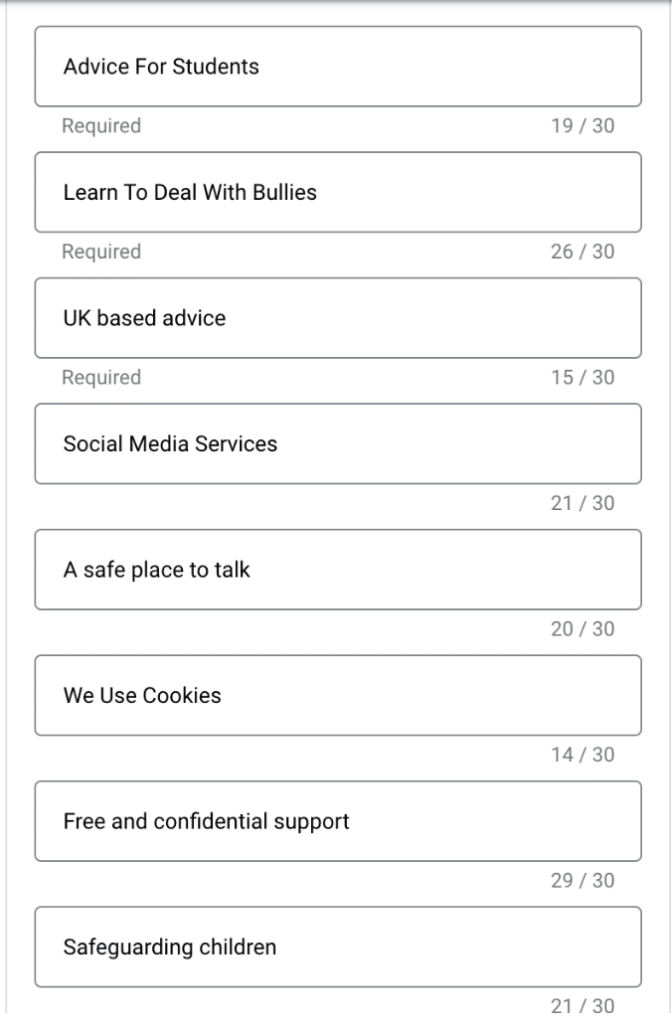
It’s important to create an ad that includes all the key points the client needs, not just include what’s on the page - like AI did above. Yes, this client uses cookies, but as you can probably guess from the other keywords, that isn’t really relevant for an ad.
Without refinement, the campaign above will miss the key points the client needs it to hit, resulting in missed opportunities and wasted ad spend. Creating a truly effective campaign requires an understanding of the client, the audience and what is trying to be achieved.
So far, AI cannot replace human creativity in any of these aspects.
Is AI actually faster for creating ad copy?
One of the biggest misconceptions of AI is that it’s fast. In reality, it’s only fast if you have a very specific and detailed prompt. A prompt that needs to be different for every client, campaign, product and target persona. If not, your ad copy won’t hit the mark.
If a new campaign needs to be created or a new client is coming on board, AI is great for ideas and is a brilliant place to start getting insights and inspiration. For those initial ideas, AI is faster, especially if you haven’t worked in that sector before.
But as we’ve demonstrated above, it’s never perfect and always needs creative input from an ad specialist.
Most of our work as ad specialists goes into refining an ad. After you’ve written a full ad with 15 headlines and 4 descriptions, some ad text will work and some won’t. Our job is to refine and replace poorly performing ad text with a variation of the best-performing ad text. At this point, you have a good understanding of the client, their business, their goals and audience, so it’s easier to write this yourself while you are in the ads interface.
So, where does AI fit into ad creation?
We started this piece by saying that 55% of people are now using AI to create ad copy, and then spent most of it explaining why we aren’t using it as much as most.
The fact that AI can create thousands of variations for ad text and even images, in seconds, means it’s undoubtedly faster than any human. However, from our tests, it cannot replicate the human element needed to drive the right results for our clients. No matter the prompt you use, at the moment, AI doesn’t understand your campaign goals, your client’s business goals and their audience as well as a human.
For this reason, we’ll stick to using AI for inspiration and use human creativity to research, refine and reach our target audience. Want to chat about paid some more? Get in touch!